
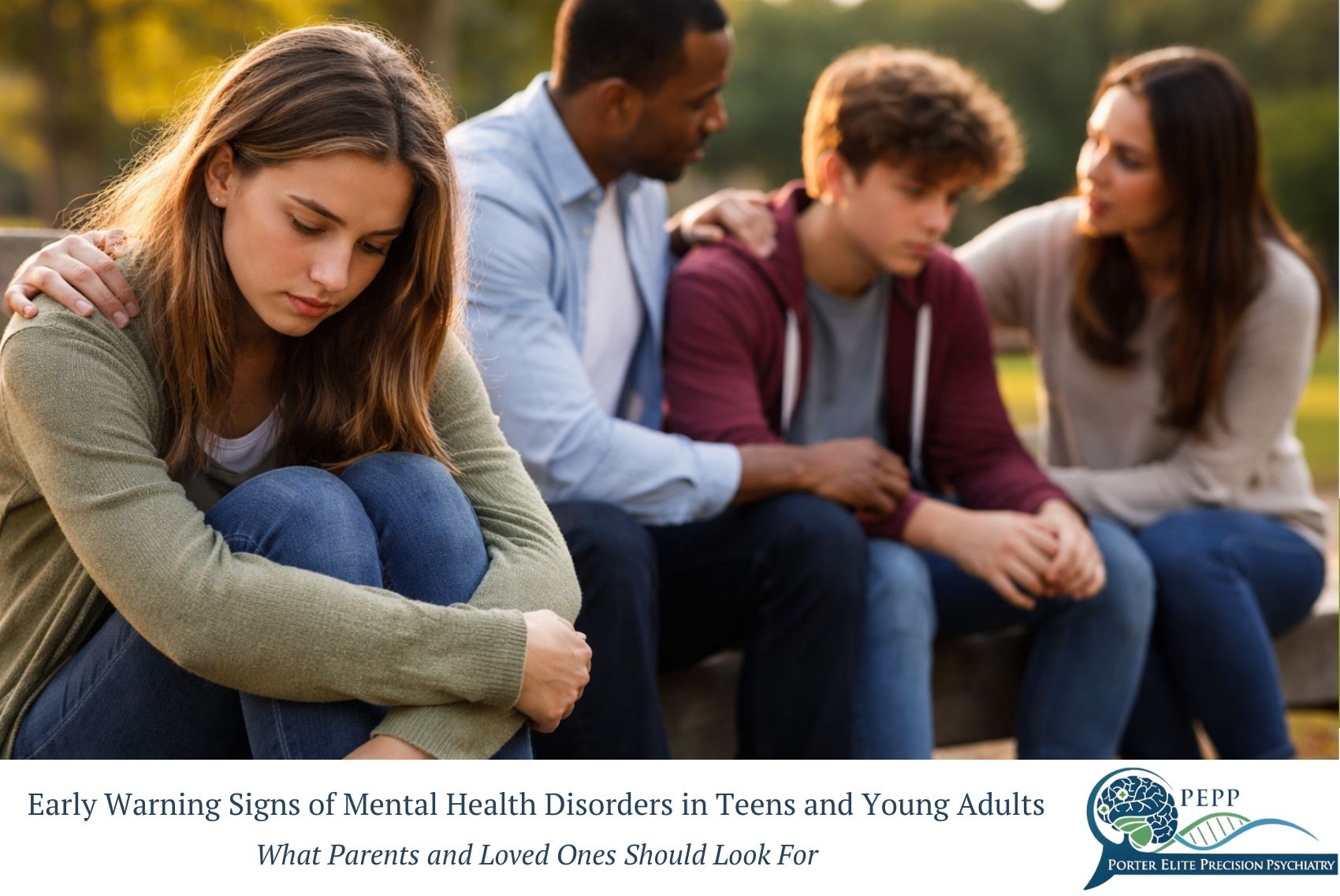
What Parents and Loved Ones Should Look For
Adolescence and early adulthood are periods of rapid emotional, social, and neurological development. While mood swings, stress, and behavioral changes can be part of normal growth, some changes may signal the early stages of a mental health disorder. Recognizing these early warning signs can make a profound difference in a young person’s well-being and long-term outcomes.
At Porter Elite Precision Psychiatry & Wellness Center, we believe that early identification and compassionate care are key to helping teens and young adults build a healthy, fulfilling future. By understanding the signs and seeking professional support when needed, parents and loved ones can play a critical role in protecting the mental health of young people.
Why Early Detection Matters
Mental health conditions often first appear during adolescence or young adulthood. According to research, many psychiatric disorders—including anxiety disorders, depression, bipolar disorder, and schizophrenia—begin to develop before age 25.
Early detection allows for:
- Faster treatment and intervention
- Reduced severity of symptoms
- Better academic and social outcomes
- Lower risk of substance abuse
- Improved long-term mental health
When families recognize early signs and seek professional support, young people are more likely to recover successfully and develop strong coping skills.
Common Early Warning Signs of Mental Health Disorders
Every teen and young adult is unique, but certain behavioral, emotional, and physical changes may indicate that something deeper is happening.
1. Persistent Mood Changes
It is normal for teens to experience occasional mood swings, but persistent changes may indicate depression or other mood disorders.
Watch for:
- Ongoing sadness or irritability
- Feelings of hopelessness or worthlessness
- Frequent crying or emotional outbursts
- Loss of interest in hobbies or activities they once enjoyed
If these symptoms last for two weeks or longer, it may be time to seek professional evaluation.
2. Social Withdrawal
A noticeable withdrawal from friends, family, or social activities can be an early sign of mental health struggles.
Signs may include:
- Avoiding friends or isolating in their room
- Losing interest in school events or extracurricular activities
- Reduced communication with family members
- Declining participation in social settings
Isolation can sometimes worsen mental health conditions if left unaddressed.
3. Changes in Sleep Patterns
Sleep disturbances are strongly connected to mental health disorders.
Common warning signs include:
- Difficulty falling asleep or staying asleep
- Sleeping excessively
- Frequent nightmares
- Extreme fatigue during the day
These changes can affect school performance, mood stability, and overall well-being.
4. Sudden Academic or Behavioral Changes
When mental health challenges arise, academic performance and behavior often shift.
Parents and educators may notice:
- Declining grades
- Difficulty concentrating
- Increased absenteeism
- Loss of motivation
- Trouble completing assignments
Behavioral changes can also include defiance, aggression, or frequent disciplinary issues.
5. Increased Anxiety or Fear
Anxiety disorders often begin during adolescence.
Warning signs may include:
- Excessive worry or fear
- Panic attacks
- Avoidance of school or social situations
- Physical symptoms like headaches or stomachaches
- Constant reassurance-seeking
Left untreated, anxiety can significantly interfere with daily functioning.
6. Changes in Eating Habits
Mental health disorders can affect appetite and body image.
Parents may observe:
- Significant weight loss or gain
- Skipping meals
- Obsession with dieting or exercise
- Eating in secret
- Frequent comments about body dissatisfaction
These behaviors may signal an eating disorder or underlying emotional distress.
7. Risk-Taking or Self-Destructive Behavior
Teens experiencing emotional pain may engage in risky behaviors as a coping mechanism.
Examples include:
- Substance use or experimentation
- Reckless driving
- Self-harm (cutting or burning)
- Sudden impulsive decisions
Such behaviors should always be taken seriously and evaluated by a mental health professional.
8. Difficulty Managing Emotions
Young people struggling with mental health conditions may find it difficult to regulate emotions.
This may appear as:
- Extreme anger or irritability
- Frequent emotional meltdowns
- Difficulty calming down
- Overreaction to minor situations
Emotional dysregulation can impact relationships and daily functioning.
9. Physical Complaints Without Clear Medical Cause
Mental health conditions often manifest physically.
Common complaints include:
- Headaches
- Stomach pain
- Chronic fatigue
- Muscle tension
If medical evaluations show no clear cause, emotional stress may be a contributing factor.
10. Talking About Hopelessness or Self-Harm
Statements about feeling hopeless or not wanting to live should always be taken seriously.
Warning phrases may include:
- “Nothing matters anymore.”
- “I wish I could disappear.”
- “Everyone would be better off without me.”
These statements require immediate attention and professional help.
How Parents and Loved Ones Can Help
Supporting a teen or young adult through mental health challenges can feel overwhelming, but your role is incredibly important.
Helpful steps include:
Maintain Open Communication
Create a safe space where your child feels comfortable sharing their thoughts and feelings without fear of judgment.
Listen Without Immediately Fixing
Sometimes teens simply need someone to listen and validate their feelings.
Watch for Patterns
Occasional mood changes are normal, but persistent patterns of behavior may indicate a deeper concern.
Encourage Professional Support
Mental health professionals can provide proper diagnosis, therapy, and treatment plans tailored to each individual.
Model Healthy Coping Skills
Demonstrate stress management, emotional regulation, and self-care in your own life.
When to Seek Professional Help
Consider seeking professional mental health care if:
- Symptoms persist longer than two weeks
- Daily functioning is affected
- School performance declines significantly
- Relationships suffer
- Risky or self-harming behaviors appear
Early intervention can prevent symptoms from worsening and help teens develop lifelong resilience.
Q&A: Early Warning Signs of Mental Health Disorders in Teens and Young Adults
Q: What age do mental health disorders usually begin?
Many mental health conditions begin during adolescence or early adulthood. Anxiety disorders can appear as early as childhood, while mood disorders and other psychiatric conditions often develop between ages 12 and 25.
Q: Are mood swings normal for teenagers?
Yes, occasional mood swings are normal due to hormonal changes and social pressures. However, persistent sadness, irritability, or emotional instability lasting more than two weeks may indicate a deeper concern.
Q: How can I talk to my teen about mental health?
Approach the conversation calmly and without judgment. Use open-ended questions such as, “How have you been feeling lately?” or “Is there anything stressing you out?” Make it clear that you are there to support them.
Q: What if my child refuses help?
Resistance is common. Continue offering support and keep communication open. In some cases, consulting with a mental health professional yourself can provide guidance on how to encourage your child to seek help.
Q: Can mental health disorders be prevented?
While not all conditions can be prevented, early awareness, emotional support, healthy coping skills, and professional guidance can significantly reduce risk and improve outcomes.
Q: What treatments are available for teens and young adults?
Treatment plans may include therapy, medication management, lifestyle strategies, and personalized mental health care. Precision psychiatry approaches can help tailor treatment to each individual’s needs.
Q: When should I seek immediate help?
Seek immediate professional help if your teen expresses thoughts of self-harm, suicide, or shows signs of severe emotional distress. Prompt intervention can be lifesaving.
Supporting Mental Health with Compassion and Expertise
Recognizing the early signs of mental health disorders in teens and young adults can make a life-changing difference. When families stay informed, communicate openly, and seek professional support when needed, young people have the best opportunity to thrive.
At Porter Elite Precision Psychiatry & Wellness Center, our team is committed to providing compassionate, personalized mental health care tailored to the unique needs of every individual and family.
Contact Porter Elite Precision Psychiatry & Wellness Center
Porter Elite Precision Psychiatry & Wellness Center
850 NW Federal Highway, Ste 220
Stuart, FL 34994
 Phone: (772) 444-8879
 Website: peppwell.com
