
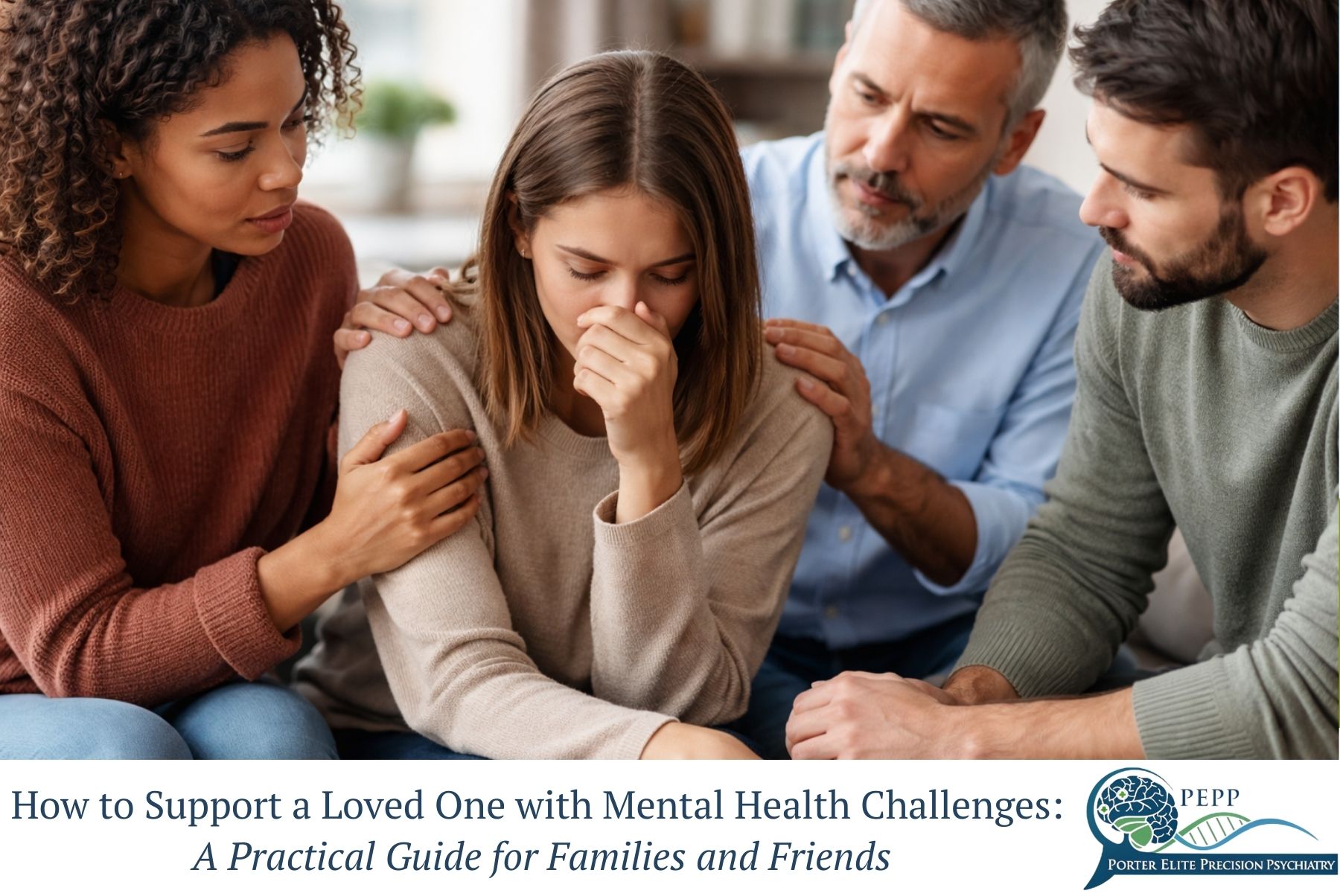
 Supporting a loved one who is struggling with mental health challenges can feel overwhelming. Many people want to help but aren’t sure what to say, what to do, or how to make a meaningful difference. Mental health conditions such as anxiety, depression, trauma-related disorders, and mood disorders can affect not only the individual but also the entire support system around them.
The good news is that compassionate, informed support can play a powerful role in someone’s healing journey. Understanding how to show up for someone in a supportive and healthy way can strengthen relationships and encourage positive mental health outcomes.
At Porter Elite Precision Psychiatry & Wellness Center, the team believes that mental wellness is most effective when individuals have both professional guidance and strong support from family and friends.
Understanding Mental Health Challenges
Mental health conditions are medical conditions that affect thoughts, emotions, behaviors, and overall functioning. They can range from mild to severe and may fluctuate over time.
Common mental health conditions include:
- Depression
- Anxiety disorders
- Bipolar disorder
- Post-traumatic stress disorder (PTSD)
- ADHD
- Stress-related conditions
- Substance use challenges
It’s important to remember that mental health struggles are not a sign of weakness or failure. They are complex conditions influenced by biological, psychological, and environmental factors.
When someone you care about is struggling, your presence and understanding can provide an important sense of safety and connection.
Signs a Loved One May Be Struggling
Sometimes mental health challenges are visible, but other times they can be subtle. Signs that someone may need support include:
- Withdrawal from family, friends, or social activities
- Persistent sadness, irritability, or mood swings
- Changes in sleep or appetite
- Difficulty concentrating
- Loss of interest in activities they once enjoyed
- Increased anxiety or worry
- Expressions of hopelessness or feeling overwhelmed
Recognizing these signs early can help guide someone toward professional support.
Practical Ways to Support a Loved One
Supporting someone with mental health challenges does not mean you need to have all the answers. Often, the most meaningful support comes from empathy, patience, and understanding.
1. Listen Without Judgment
One of the most powerful things you can do is simply listen. Avoid interrupting or immediately offering solutions.
Instead:
- Allow them to share their feelings openly
- Validate their emotions
- Show empathy and understanding
Simple responses like “I’m here for you” or “That sounds really difficult” can help someone feel heard and supported.
2. Educate Yourself About Mental Health
Learning about the condition your loved one may be experiencing can help you understand their behavior and needs.
Education can help you:
- Respond with compassion instead of frustration
- Recognize symptoms
- Support treatment and recovery efforts
Mental health awareness reduces stigma and promotes healthier conversations.
3. Encourage Professional Help
While emotional support is valuable, professional care is often essential. Encouraging a loved one to seek help from a qualified mental health provider can be a crucial step toward healing.
You can support them by:
- Offering to help schedule an appointment
- Assisting with transportation if needed
- Reassuring them that seeking help is a positive step
At Porter Elite Precision Psychiatry & Wellness Center, individualized psychiatric care focuses on understanding each person’s unique needs and treatment goals.
4. Be Patient with the Healing Process
Mental health recovery rarely happens overnight. There may be ups and downs along the way.
Supporting someone through this process means:
- Avoiding pressure for immediate change
- Celebrating small improvements
- Maintaining realistic expectations
Patience and consistency can make a meaningful difference in someone’s recovery journey.
5. Offer Practical Support
Sometimes everyday responsibilities can feel overwhelming for someone struggling with mental health challenges.
Offering practical help can reduce stress, such as:
- Helping with errands or daily tasks
- Preparing meals
- Providing childcare support
- Accompanying them to appointments
Small acts of kindness can provide relief and encouragement.
6. Respect Boundaries
While supporting someone is important, it’s also essential to respect their boundaries.
Allow them to:
- Share at their own pace
- Maintain independence where possible
- Take time to process their emotions
Healthy support balances compassion with respect.
7. Take Care of Your Own Mental Health
Supporting someone else can be emotionally demanding. It’s important to care for your own well-being as well.
Consider:
- Seeking support for yourself
- Practicing stress management techniques
- Setting healthy emotional boundaries
Caring for yourself allows you to continue being a stable source of support.
The Importance of Professional Mental Health Care
Professional psychiatric care can provide the tools, insight, and treatment necessary to manage mental health conditions effectively.
Comprehensive mental health treatment may include:
- Psychiatric evaluations
- Medication management
- Therapy or counseling
- Personalized wellness strategies
- Lifestyle guidance for mental wellness
At Porter Elite Precision Psychiatry & Wellness Center, treatment is designed with a precision-based, patient-centered approach, helping individuals achieve lasting mental wellness.
Q&A: Supporting Someone with Mental Health Challenges
How do I start a conversation about mental health with a loved one?
Choose a calm, private moment and express concern in a supportive way. You might say something like, “I’ve noticed you’ve seemed stressed lately and I care about you. Do you want to talk about it?”
What should I avoid saying to someone struggling with mental health?
Avoid minimizing their experience or offering oversimplified solutions such as:
- “Just think positive.”
- “Other people have it worse.”
- “You’ll get over it.”
Instead, focus on empathy and understanding.
How can I encourage someone to seek professional help?
Approach the topic with care and support. Let them know that seeking help is a sign of strength and that professionals are trained to provide effective treatment.
You might also offer to help them research providers or schedule an appointment.
What if my loved one refuses help?
If someone is not ready to seek help, continue offering emotional support and keep communication open. Sometimes it takes time for someone to feel comfortable pursuing professional care.
If there are signs of crisis or safety concerns, contacting a mental health professional immediately is important.
Can supporting someone with mental health challenges affect my own well-being?
Yes. Caregivers and loved ones may experience emotional stress as well. Practicing self-care and seeking your own support when needed can help maintain balance.
When should someone seek professional mental health care?
Professional care may be beneficial if symptoms:
- Interfere with daily life
- Persist for several weeks or longer
- Cause emotional distress
- Impact work, relationships, or sleep
Early intervention often leads to better outcomes.
Compassionate Mental Health Care in Stuart, FL
Supporting a loved one through mental health challenges can be one of the most meaningful ways to show care and compassion. When combined with professional mental health care, this support can help individuals move toward healing, resilience, and long-term wellness.
If you or someone you care about is struggling with mental health concerns, professional guidance can make a significant difference.
Contact Information
Porter Elite Precision Psychiatry & Wellness Center
850 NW Federal Highway, Ste 220
Stuart, FL 34994
 Phone: (772) 444-8879
 Website: peppwell.com
