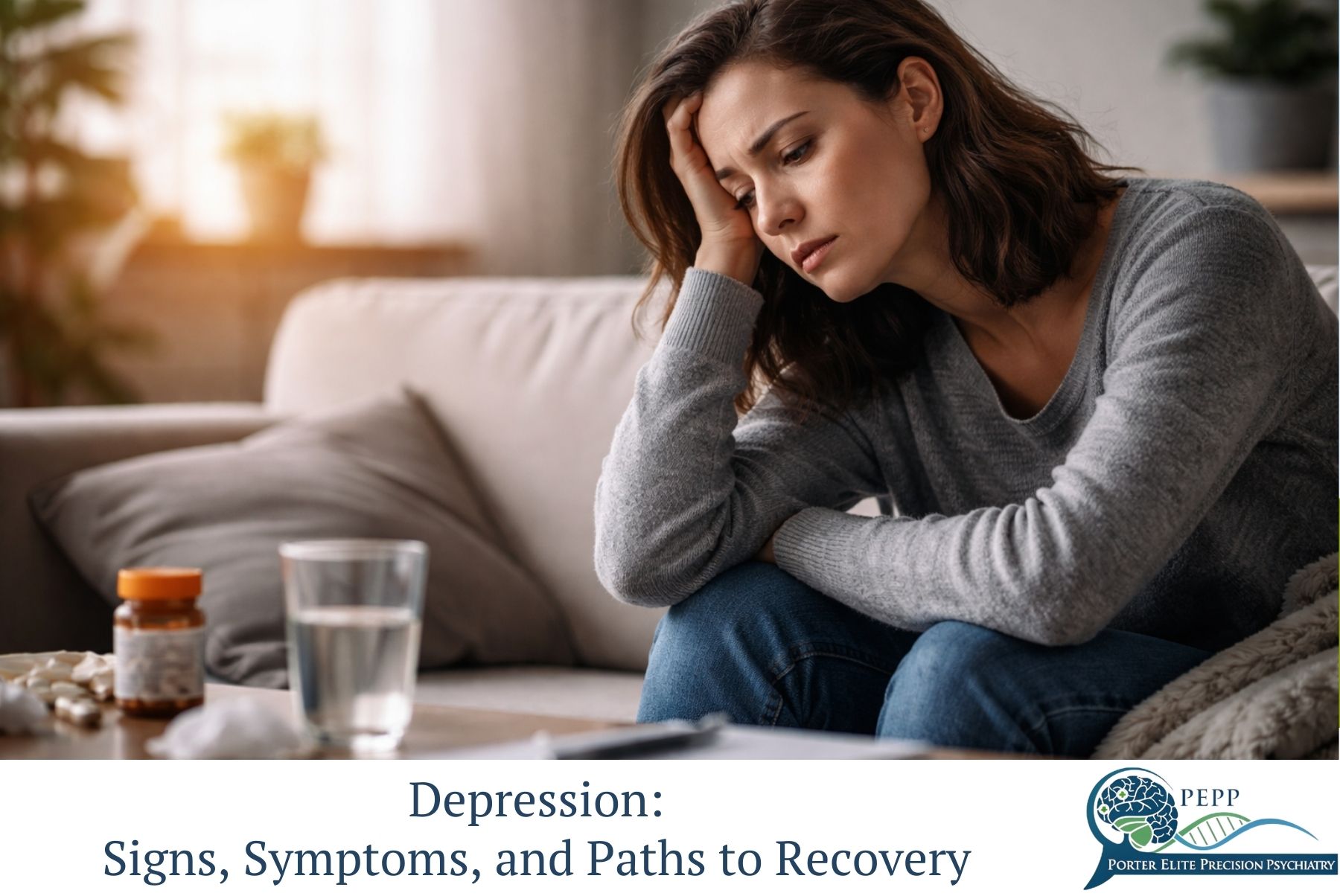
 Depression is more than just feeling sad or going through a difficult time. It is a serious mental health condition that affects how a person thinks, feels, and functions in daily life. Millions of people experience depression each year, yet many struggle to recognize the signs or feel unsure about where to seek help.
Understanding depression is the first step toward healing. With the right support and treatment, recovery is possible. At Porter Elite Precision Psychiatry & Wellness Center, compassionate professionals help individuals identify the root causes of depression and develop personalized treatment plans designed to support long-term emotional wellness.
This guide will help you recognize the signs of depression, understand its potential causes, and explore the pathways to recovery.
What Is Depression?
Depression, also known as major depressive disorder, is a mental health condition characterized by persistent feelings of sadness, hopelessness, and loss of interest in activities that once brought joy.
Unlike temporary emotional lows, depression can affect every aspect of life—including relationships, work performance, physical health, and overall quality of life. It can also influence sleep patterns, appetite, concentration, and energy levels.
Depression is not a sign of weakness or something someone can simply “snap out of.” It is a complex condition that often requires professional care, support, and treatment.
Common Signs and Symptoms of Depression
Recognizing depression early can make a significant difference in recovery. Symptoms can vary from person to person, but common signs include:
Persistent Sadness or Low Mood
Feeling sad, empty, or hopeless for most of the day, nearly every day.
Loss of Interest or Pleasure
Activities that once felt enjoyable—such as hobbies, socializing, or exercise—may no longer feel rewarding.
Changes in Sleep Patterns
People with depression may experience insomnia, difficulty falling asleep, or sleeping excessively.
Fatigue or Low Energy
Even simple tasks may feel exhausting or overwhelming.
Difficulty Concentrating
Trouble focusing, remembering details, or making decisions can become common.
Appetite or Weight Changes
Depression may cause noticeable weight loss or weight gain due to changes in eating habits.
Feelings of Guilt or Worthlessness
People may blame themselves excessively or feel like they are a burden to others.
Physical Symptoms
Headaches, digestive issues, or unexplained aches and pains can sometimes accompany depression.
Thoughts of Self-Harm or Suicide
In severe cases, individuals may experience thoughts about harming themselves or ending their life. This is a medical emergency and requires immediate help.
If these symptoms persist for two weeks or longer, it may be time to seek professional support.
What Causes Depression?
Depression often develops due to a combination of factors rather than a single cause. Some of the most common contributors include:
Biological Factors
Brain chemistry and neurotransmitter imbalances can play a role in mood regulation.
Genetics
Individuals with a family history of depression may have an increased risk.
Trauma or Stress
Major life events—such as loss, relationship difficulties, financial stress, or trauma—can trigger depressive episodes.
Medical Conditions
Chronic illness, hormonal changes, and certain medications may contribute to depression.
Environmental and Lifestyle Factors
Isolation, poor sleep, substance use, and ongoing stress can increase vulnerability.
Because depression is complex, treatment is often most effective when it addresses both biological and psychological factors.
Effective Treatment Options for Depression
The good news is that depression is highly treatable. Many individuals experience significant improvement through professional care and support.
At Porter Elite Precision Psychiatry & Wellness Center, treatment plans are tailored to each individual’s needs and may include the following approaches:
Psychiatric Evaluation
A comprehensive assessment helps identify the underlying factors contributing to depression and guides the most effective treatment strategy.
Medication Management
Antidepressant medications can help balance brain chemistry and reduce symptoms. Careful monitoring ensures medications are safe and effective.
Psychotherapy (Talk Therapy)
Evidence-based therapies such as cognitive behavioral therapy (CBT) help individuals identify negative thought patterns and develop healthier coping strategies.
Precision Psychiatry
Advanced psychiatric care considers biological, psychological, and lifestyle factors to create individualized treatment plans.
Lifestyle and Wellness Support
Improving sleep, nutrition, exercise, and stress management can significantly support mental health recovery.
Recovery is a journey, and with the right support, individuals can regain hope, motivation, and emotional balance.
The Importance of Seeking Professional Help
One of the biggest barriers to treatment is the belief that depression must be handled alone. In reality, seeking help is a powerful step toward healing.
Mental health professionals provide a safe and supportive environment where individuals can explore their experiences without judgment. Early intervention often leads to better outcomes and a quicker path to recovery.
If you or someone you care about is struggling with depression, professional guidance can make a life-changing difference.
Frequently Asked Questions (Q&A)
What is the difference between sadness and depression?
Sadness is a normal emotional response to difficult situations and usually fades over time. Depression is a persistent condition that interferes with daily functioning and lasts for weeks or longer.
How long does depression typically last?
Depression can vary widely. Some people experience episodes lasting several weeks or months, while others may struggle with recurring symptoms. With proper treatment, many individuals experience significant improvement.
Can depression go away on its own?
While mild symptoms may sometimes improve with time, moderate to severe depression often requires professional treatment. Early intervention can help prevent symptoms from worsening.
Is depression caused by chemical imbalances?
Brain chemistry plays a role in depression, but it is only one factor. Genetics, life experiences, trauma, and environmental stressors can also contribute.
What treatments are most effective for depression?
Treatment often includes a combination of therapy, medication management, and lifestyle changes. Personalized care plans tend to produce the best results.
When should someone seek professional help for depression?
If symptoms persist for more than two weeks, interfere with daily life, or include thoughts of self-harm, it is important to seek professional help as soon as possible.
Can lifestyle changes help improve depression?
Yes. Regular exercise, improved sleep, healthy nutrition, social support, and stress reduction techniques can significantly improve mental health when combined with professional treatment.
Is depression treatable?
Absolutely. With the right support and treatment plan, many individuals recover from depression and lead fulfilling, meaningful lives.
Begin Your Path Toward Healing
Depression can feel overwhelming, but you do not have to face it alone. Professional support can help you understand your symptoms, regain control of your emotional well-being, and move toward a healthier, more balanced life.
At Porter Elite Precision Psychiatry & Wellness Center, compassionate mental health professionals provide personalized care designed to address the unique needs of each individual. Their precision psychiatry approach focuses on identifying the root causes of mental health concerns while guiding patients toward effective and lasting recovery.
Contact Information
Porter Elite Precision Psychiatry & Wellness Center
850 NW Federal Highway, Ste 220
Stuart, FL 34994
 Phone: (772) 444-8879
 Website: peppwell.com
