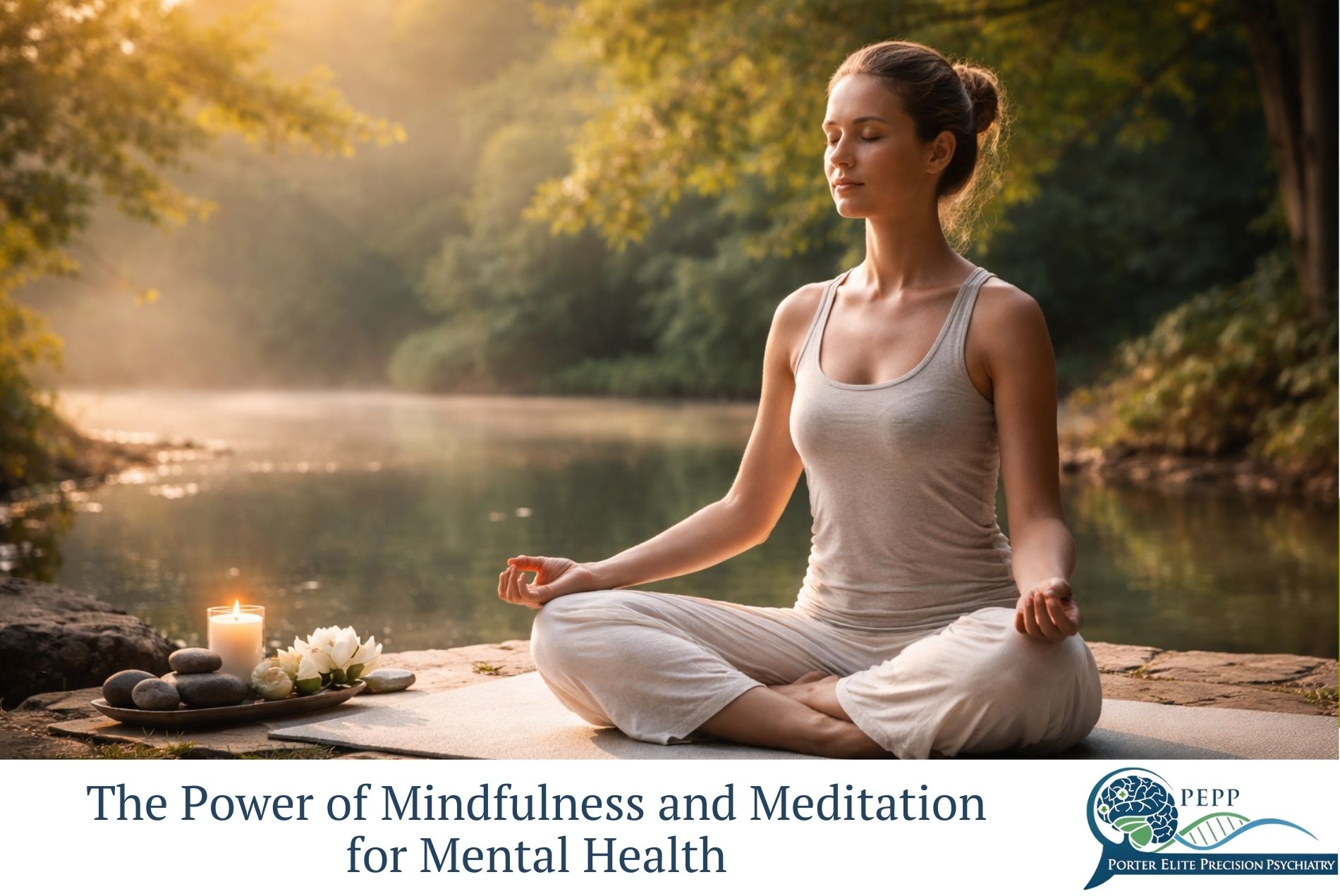
 In today’s fast-paced world, stress, anxiety, and emotional exhaustion have become increasingly common. Between demanding work schedules, personal responsibilities, and constant digital distractions, many people struggle to find moments of peace. Fortunately, mindfulness and meditation offer powerful, evidence-based ways to calm the mind, improve emotional balance, and support long-term mental wellness.
At Porter Elite Precision Psychiatry & Wellness Center, individuals receive compassionate, personalized mental health care that integrates modern psychiatric expertise with holistic wellness strategies. Mindfulness and meditation are valuable tools that can complement professional mental health treatment, helping patients develop greater resilience, clarity, and emotional stability.
This guide explores how mindfulness and meditation work, their benefits for mental health, and practical techniques you can start using today to cultivate a calmer, more balanced life.
Understanding Mindfulness and Meditation
What Is Mindfulness?
Mindfulness is the practice of being fully present in the current moment without judgment. Rather than dwelling on past regrets or worrying about future outcomes, mindfulness encourages awareness of thoughts, feelings, and sensations as they arise.
Mindfulness can be practiced during everyday activities such as walking, eating, or breathing. It trains the mind to observe experiences calmly rather than reacting automatically to stress or emotional triggers.
What Is Meditation?
Meditation is a structured practice designed to develop mindfulness and mental clarity. It often involves focusing attention on a specific object, such as the breath, a word, a sensation, or guided imagery.
Meditation helps quiet mental chatter and allows the brain to enter a deeply relaxed state. With regular practice, meditation can significantly improve emotional regulation, focus, and overall mental well-being.
How Mindfulness and Meditation Support Mental Health
Research continues to show that mindfulness-based practices can positively influence mental and emotional health. Some of the most notable benefits include:
Reduced Stress
Mindfulness helps regulate the body’s stress response by lowering cortisol levels and calming the nervous system. Regular meditation encourages relaxation and helps individuals respond to challenges with greater clarity and control.
Improved Emotional Regulation
Practicing mindfulness teaches individuals to observe emotions without becoming overwhelmed by them. This can reduce impulsive reactions and improve emotional resilience during difficult situations.
Lower Anxiety and Depression Symptoms
Many mental health professionals incorporate mindfulness-based therapies because they help reduce repetitive negative thinking patterns often associated with anxiety and depression.
Better Sleep
Meditation helps quiet racing thoughts that often interfere with sleep. Relaxation techniques can prepare the mind and body for restorative rest.
Increased Focus and Mental Clarity
Mindfulness strengthens attention and concentration by training the brain to return to the present moment when distractions arise.
Practical Mindfulness and Meditation Techniques
The good news is that mindfulness does not require special equipment or hours of free time. Even a few minutes each day can make a meaningful difference.
Here are several simple techniques you can try.
1. Mindful Breathing
This foundational meditation technique focuses attention on the breath.
Steps:
- Sit comfortably in a quiet space.
- Close your eyes or soften your gaze.
- Take slow, deep breaths.
- Notice the sensation of air entering and leaving your body.
- When your mind wanders, gently bring your focus back to your breath.
Even just five minutes of mindful breathing can significantly reduce stress levels.
2. Body Scan Meditation
This practice encourages awareness of physical sensations throughout the body.
Steps:
- Lie down or sit comfortably.
- Slowly bring attention to each part of your body, starting at your feet.
- Notice sensations such as tension, warmth, or relaxation.
- Continue moving upward through the body until you reach the head.
Body scans are especially helpful for releasing physical tension and promoting relaxation.
3. Mindful Walking
Mindfulness can also be practiced while moving.
During a mindful walk:
- Pay attention to each step.
- Notice how your feet feel as they touch the ground.
- Observe surrounding sounds, sights, and sensations.
- Avoid distractions like phones or multitasking.
This technique combines physical activity with mental relaxation.
4. Guided Meditation
Guided meditations involve listening to a professional instructor who leads you through relaxation, visualization, or breathing exercises.
Many people find guided meditation helpful when they are new to mindfulness or have difficulty focusing on their own.
5. Gratitude Meditation
This practice focuses on recognizing positive aspects of life.
Steps:
- Sit quietly and take several calming breaths.
- Reflect on three things you are grateful for today.
- Allow feelings of appreciation and warmth to fill your awareness.
Gratitude meditation can shift attention away from stress and toward positive emotional experiences.
Building a Sustainable Mindfulness Practice
Like any healthy habit, mindfulness becomes more effective with consistency.
Helpful tips include:
- Start with short sessions (3–5 minutes).
- Practice at the same time each day.
- Be patient with yourself if your mind wanders.
- Combine mindfulness with therapy or psychiatric care when needed.
Many individuals benefit from professional guidance to incorporate mindfulness into a comprehensive mental health treatment plan.
When Professional Mental Health Support Is Important
While mindfulness and meditation can greatly improve emotional well-being, they are not a replacement for professional mental health care when symptoms become overwhelming.
If you experience persistent anxiety, depression, mood instability, or difficulty functioning in daily life, seeking professional support can make a significant difference.
At Porter Elite Precision Psychiatry & Wellness Center, experienced professionals provide personalized mental health care tailored to each individual’s needs. Treatment plans may include therapy, medication management, lifestyle strategies, and holistic approaches such as mindfulness practices.
Frequently Asked Questions (Q&A)
What is the difference between mindfulness and meditation?
Mindfulness is a mental state of awareness that can be practiced during everyday activities, while meditation is a structured exercise used to develop mindfulness and mental clarity.
How long should I meditate each day?
Even 5–10 minutes per day can produce noticeable benefits. Many people gradually extend their sessions to 15–20 minutes as they become more comfortable with the practice.
Can meditation help with anxiety?
Yes. Meditation has been shown to reduce anxiety by calming the nervous system, improving emotional regulation, and decreasing repetitive worry-based thinking.
Is mindfulness helpful for depression?
Mindfulness-based therapies are commonly used to support individuals experiencing depression. These practices help individuals observe negative thoughts without becoming trapped in them.
Do I need a quiet environment to meditate?
While a quiet space is helpful, mindfulness can also be practiced in many environments, including during walks, while commuting, or during daily activities.
What if my mind keeps wandering?
This is completely normal. The goal is not to eliminate thoughts but to gently bring your attention back to your focus point whenever distractions arise.
Can mindfulness replace therapy or medication?
Mindfulness is a valuable complementary tool, but it should not replace professional mental health care when clinical treatment is necessary.
How quickly will I notice results?
Some individuals feel calmer after their first session, while others notice improvements over several weeks of consistent practice.
Are there different types of meditation?
Yes. Common types include mindfulness meditation, loving-kindness meditation, guided meditation, body scan meditation, and transcendental meditation.
Who should consider professional mental health care?
Anyone experiencing persistent emotional distress, difficulty managing stress, mood changes, or symptoms that interfere with daily functioning should consider consulting a mental health professional.
Take the First Step Toward Better Mental Wellness
Developing mindfulness and meditation habits can significantly improve mental clarity, emotional resilience, and overall well-being. However, professional support can provide deeper insight and personalized care when mental health challenges arise.
If you are looking for compassionate, expert mental health care, the team at Porter Elite Precision Psychiatry & Wellness Center is here to help.
Contact Information
Porter Elite Precision Psychiatry & Wellness Center
850 NW Federal Highway, Ste 220
Stuart, FL 34994
 Phone: (772) 444-8879
 Website: peppwell.com
