
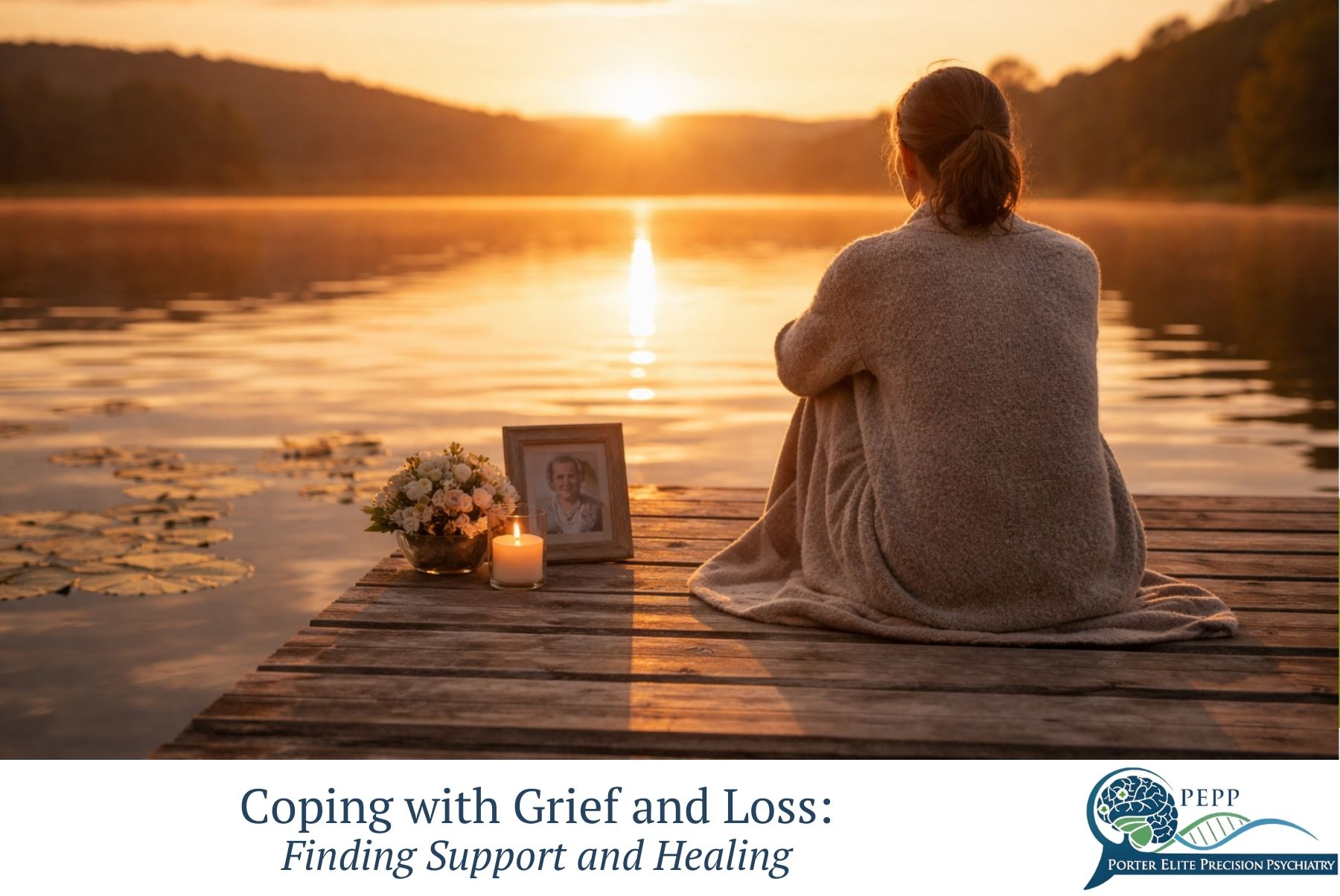
Grief is one of the most profound and universal human experiences. Whether it follows the loss of a loved one, a major life transition, or another deeply personal loss, grief can bring intense emotions that affect every part of life. While everyone grieves differently, understanding the grieving process and seeking compassionate support can make a powerful difference in healing.
At Porter Elite Precision Psychiatry & Wellness Center, individuals and families receive personalized mental health care designed to support emotional wellness, resilience, and recovery. Through compassionate, evidence-based approaches, the team helps patients navigate grief, loss, and life’s most difficult emotional challenges.
Understanding Grief and Loss
Grief is the emotional response to loss. Most people associate grief with the death of a loved one, but it can also occur after many types of life changes, including:
- Loss of a relationship
- Serious illness or health changes
- Loss of a job or financial security
- Major life transitions such as moving or retirement
- Loss of a pet
- Loss of identity or life expectations
Grief can bring a wide range of emotional and physical reactions, including sadness, anger, guilt, confusion, fatigue, or difficulty concentrating. These feelings are natural responses to loss, and healing takes time.
At Porter Elite Precision Psychiatry & Wellness Center, the focus is on helping individuals understand their grief while providing tools and support to move forward in healthy ways.
The Emotional Stages of Grief
Many people experience grief in phases, often referred to as the “stages of grief.” While these stages are not linear and may vary from person to person, they provide a helpful framework for understanding common reactions.
Denial
Denial may occur immediately after a loss. It can feel like shock or numbness and may help protect the mind from overwhelming emotions.
Anger
Feelings of frustration or anger may arise, sometimes directed at circumstances, others, or even oneself.
Bargaining
Some individuals find themselves thinking about “what if” or “if only” scenarios as they attempt to process the loss.
Depression
Deep sadness, withdrawal, or a sense of emptiness may develop as the reality of the loss becomes clearer.
Acceptance
Acceptance does not mean forgetting or eliminating sadness. Rather, it reflects an ability to acknowledge the loss and begin adjusting to life moving forward.
Professional mental health support can help individuals navigate these stages and cope with the intense emotions that accompany grief.
Healthy Strategies for Coping with Grief
While grief cannot be rushed, there are healthy strategies that can support healing and emotional recovery.
Allow Yourself to Feel
Suppressing emotions may delay healing. Giving yourself permission to experience sadness, anger, or confusion is an important step toward recovery.
Seek Support
Connecting with trusted friends, family members, or a mental health professional can provide comfort and perspective during difficult times.
Maintain Daily Routines
Structure can help restore a sense of stability when life feels unpredictable.
Practice Self-Care
Sleep, nutrition, physical activity, and mindfulness practices can improve emotional resilience during grief.
Express Your Feelings
Writing in a journal, engaging in creative outlets, or participating in support groups can help process emotions in healthy ways.
Consider Professional Guidance
Mental health professionals can provide tools and therapeutic approaches to help individuals process grief and build coping skills.
At Porter Elite Precision Psychiatry & Wellness Center, personalized psychiatric care and wellness strategies are designed to support individuals through each stage of healing.
When Grief Becomes Complicated
While grief is a natural process, sometimes it can become overwhelming or prolonged. Complicated grief may include:
- Persistent inability to function in daily life
- Intense longing or preoccupation with the loss
- Severe depression or anxiety
- Withdrawal from social connections
- Feelings of hopelessness or emptiness
In these cases, professional mental health care can be especially important. Evidence-based treatments, therapy, and psychiatric support can help individuals process grief and regain emotional balance.
The Importance of Professional Mental Health Support
Grief counseling and psychiatric care provide structured support during a difficult emotional period. Professional care may include:
- Individual therapy
- Psychiatric evaluations
- Medication management when appropriate
- Personalized mental health treatment plans
- Wellness and coping strategies tailored to each individual
At Porter Elite Precision Psychiatry & Wellness Center, care is centered around precision psychiatry—an approach that focuses on individualized treatment based on each person’s unique needs.
This compassionate and personalized approach can help patients find hope, resilience, and healing.
Frequently Asked Questions About Grief and Loss
What is a normal grieving process?
Grief varies greatly from person to person. While many people experience emotional stages such as shock, sadness, anger, and acceptance, there is no single “correct” timeline for grieving.
How long does grief typically last?
Grief has no fixed timeline. Some individuals begin feeling better within months, while others may experience waves of grief for years. Healing is gradual and personal.
When should someone seek professional help for grief?
If grief begins interfering with daily life, relationships, or mental health, professional support may be helpful. Persistent depression, anxiety, or inability to function are signs that additional support could be beneficial.
Can therapy help with grief?
Yes. Therapy provides a safe space to process emotions, develop coping strategies, and work through complex feelings associated with loss.
What are healthy ways to cope with grief?
Healthy coping strategies include talking with supportive people, maintaining routines, practicing self-care, journaling, and seeking professional guidance when needed.
Is it normal to feel guilt after a loss?
Yes. Many people experience feelings of guilt or regret while grieving. A mental health professional can help individuals work through these feelings and develop self-compassion.
Can grief affect physical health?
Grief can cause fatigue, sleep disturbances, changes in appetite, and weakened immunity. Taking care of physical health during grief is important.
How can I support someone who is grieving?
Offer patience, listen without judgment, provide practical help, and encourage them to seek professional support if needed.
Finding Support and Healing
Grieving is a deeply personal journey, but no one has to navigate it alone. With compassionate support, personalized care, and effective mental health strategies, individuals can move toward healing while honoring the memories and experiences connected to their loss.
If you or someone you love is struggling with grief, professional support can provide guidance, comfort, and hope during the healing process.
Contact Information
Porter Elite Precision Psychiatry & Wellness Center
850 NW Federal Highway, Ste 220
Stuart, FL 34994
 Phone: (772) 444-8879
 Website: peppwell.com
