
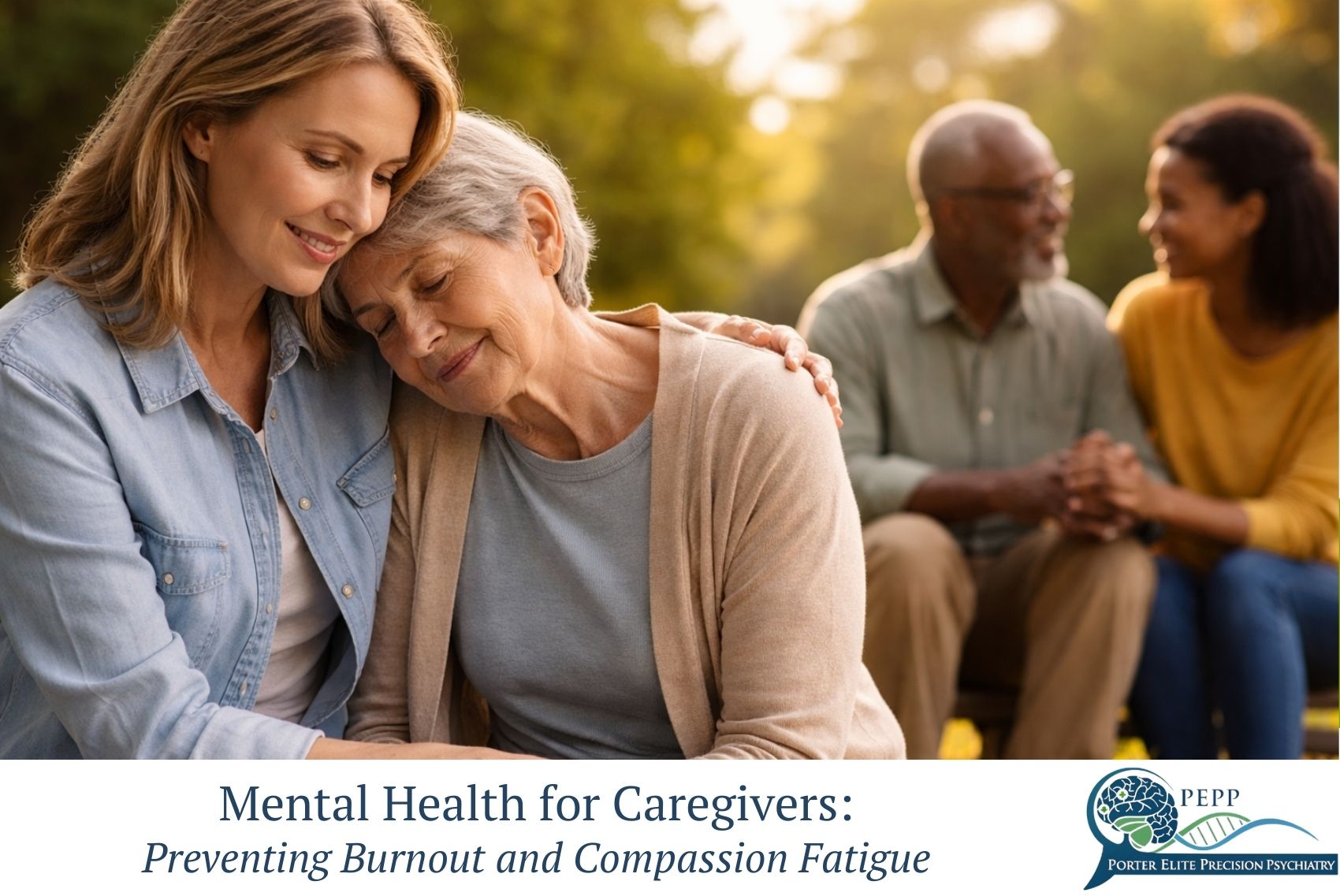
Caring for a loved one who is struggling with mental health challenges can be one of the most meaningful roles a person takes on—but it can also be emotionally and physically demanding. Caregivers often place their loved one’s needs above their own, which can lead to burnout, compassion fatigue, and declining personal well-being if proper support and self-care are not prioritized.
At Porter Elite Precision Psychiatry & Wellness Center, caregivers are recognized as a critical part of the healing process. Providing support for those who support others is essential to maintaining both personal wellness and effective caregiving.
This guide explores how caregivers can protect their mental health, recognize early signs of burnout, and develop sustainable strategies for supporting loved ones while maintaining balance in their own lives.
Understanding Caregiver Burnout and Compassion Fatigue
When caring for someone with depression, anxiety, bipolar disorder, trauma-related conditions, or other mental health challenges, the emotional toll can accumulate over time.
Two common experiences caregivers face are burnout and compassion fatigue.
Caregiver Burnout
Burnout is a state of emotional, physical, and mental exhaustion caused by prolonged stress and caregiving responsibilities.
Common signs include:
- Feeling constantly overwhelmed or exhausted
- Irritability or frustration
- Loss of motivation
- Difficulty sleeping
- Withdrawing from friends or activities
- Feeling resentful or helpless
Compassion Fatigue
Compassion fatigue occurs when caregivers become emotionally drained from continually supporting someone experiencing psychological distress. It can lead to reduced empathy, emotional numbness, or feeling disconnected.
Recognizing these symptoms early is essential so caregivers can take steps to protect their own mental health.
Why Caregiver Mental Health Matters
When caregivers neglect their own well-being, both the caregiver and the loved one they support can suffer. Chronic stress may lead to:
- Anxiety and depression
- Physical health problems
- Emotional exhaustion
- Relationship strain
- Reduced ability to provide effective care
Maintaining personal mental health allows caregivers to remain present, compassionate, and resilient over the long term.
Practical Tips to Prevent Caregiver Burnout
1. Set Realistic Expectations
Caregivers often feel responsible for “fixing” their loved one’s mental health challenges. However, healing is a complex process that requires professional support and time.
Remember:
- You cannot solve everything alone.
- Progress often happens gradually.
- Professional treatment plays an important role.
Allowing yourself to release unrealistic expectations can significantly reduce stress.
2. Establish Healthy Boundaries
Healthy boundaries protect both the caregiver and the individual receiving care.
Boundaries might include:
- Scheduling personal time
- Setting limits on emotionally draining conversations
- Encouraging professional treatment
- Maintaining personal responsibilities and routines
Boundaries are not selfish—they are essential for sustainable caregiving.
3. Prioritize Self-Care
Self-care is not a luxury for caregivers—it is a necessity.
Helpful self-care practices include:
- Regular exercise
- Quality sleep
- Balanced nutrition
- Mindfulness or meditation
- Journaling
- Spending time outdoors
Even small daily habits can significantly improve resilience and emotional well-being.
4. Seek Professional Support
Caregivers benefit greatly from mental health support themselves.
Professional counseling can help caregivers:
- Process emotional stress
- Develop coping strategies
- Learn communication techniques
- Reduce feelings of isolation
Working with a mental health professional can provide valuable guidance and perspective.
5. Build a Support Network
Caregiving should never happen in isolation.
Consider:
- Support groups
- Friends or family who can assist
- Online caregiver communities
- Faith or community organizations
Sharing experiences with others who understand caregiving challenges can reduce emotional burden.
6. Take Regular Breaks
Caregivers often feel guilty stepping away, but rest and recovery are essential.
Respite options may include:
- Family members helping temporarily
- Professional caregiving services
- Community support programs
Even short breaks can restore emotional balance and prevent exhaustion.
7. Learn About Mental Health Conditions
Understanding the mental health challenges your loved one is experiencing can reduce uncertainty and improve communication.
Education helps caregivers:
- Recognize symptoms
- Understand treatment options
- Respond to crises more effectively
- Set realistic expectations for recovery
Knowledge empowers caregivers to provide informed support.
When Caregivers Should Seek Help
If caregiving responsibilities begin to negatively affect your daily functioning or emotional well-being, it may be time to seek professional support.
Warning signs include:
- Persistent anxiety or depression
- Frequent emotional outbursts
- Sleep disturbances
- Chronic fatigue
- Feelings of hopelessness
- Difficulty managing responsibilities
Seeking help early can prevent more serious mental health concerns.
Compassionate Mental Health Support in Stuart, Florida
At Porter Elite Precision Psychiatry & Wellness Center, caregivers and their loved ones receive compassionate, evidence-based mental health care tailored to each individual’s needs.
The center offers a personalized approach to psychiatry and wellness, helping families navigate mental health challenges with professional guidance, support, and innovative treatment strategies.
Caregivers do not have to face these challenges alone. Professional mental health support can provide the tools needed to maintain balance, resilience, and hope.
Frequently Asked Questions (Q&A)
What is caregiver burnout?
Caregiver burnout is emotional, physical, and mental exhaustion caused by prolonged caregiving responsibilities. It often results from chronic stress and lack of personal support or rest.
What is compassion fatigue?
Compassion fatigue occurs when caregivers become emotionally drained from continually supporting someone in distress. It can lead to emotional numbness, irritability, and decreased empathy.
How can caregivers protect their mental health?
Caregivers can protect their mental health by prioritizing self-care, setting healthy boundaries, seeking professional counseling, and building a strong support network.
Is it normal for caregivers to feel overwhelmed?
Yes. Caring for someone with mental health challenges can be demanding. Feeling overwhelmed does not mean you are failing—it means you may need additional support.
When should caregivers seek professional help?
Caregivers should seek professional help if they experience persistent stress, anxiety, depression, exhaustion, or difficulty managing daily responsibilities.
Can therapy help caregivers?
Yes. Therapy provides caregivers with coping strategies, emotional support, and tools to manage stress while maintaining healthy relationships.
How can caregivers encourage loved ones to seek mental health treatment?
Caregivers can encourage treatment by expressing concern, offering support, providing information about resources, and emphasizing that seeking help is a positive step toward healing.
What role do caregivers play in mental health recovery?
Caregivers often provide emotional support, encouragement, and stability, which can significantly aid recovery. However, professional treatment remains a critical component of mental health care.
Contact Porter Elite Precision Psychiatry & Wellness Center
Porter Elite Precision Psychiatry & Wellness Center
850 NW Federal Highway, Ste 220
Stuart, FL 34994
 Phone: (772) 444-8879
 Website: peppwell.com
